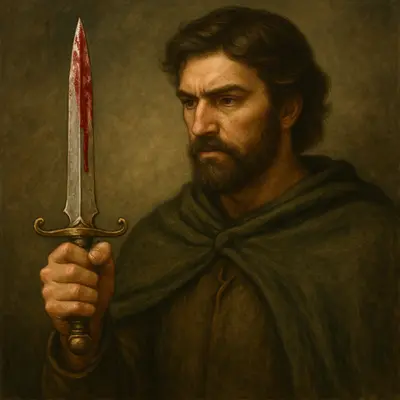
Macbeth - Summary & Analysis
In Short
- “Macbeth” is a widely celebrated tragic play written by William Shakespeare.
- While returning from a war victory, Macbeth, a Scottish Army general is met by three witches. They predict Macbeth to be the Thane of Cawdor and “King hereafter”. They also foretell that the successors of Banquo (another general) would be kings.
- Excited by the witches’ prophecies and encouraged by his wife, Macbeth kills Duncan (the King) to become the King himself.
- Now to hide his guilt and to protect his Kingship, Macbeth goes on to kill the King’s guards, Banquo and even Macduff’s (a nobleman) family members in a series of events.
- But finally, Macbeth is defeated by the English Army supporting Malcolm (Duncan’s elder son) and Macduff kills Macbeth in that war to take revenge. Malcolm becomes the new king.
Macbeth – Into Details
Publication
Though precise dates cannot be ascertained, Shakespeare’s tragedy “Macbeth” is thought to be written sometime in 1606 -1607 and to be first staged in 1606. However, analyzing available evidences, Shakespearean scholars have agreed that it was composed sometime between 1603 and 1610.
The play was first published in 1623 in the “First Folio” (originally known as “Mr. William Shakespeare's Comedies, Histories, & Tragedies”).
Sources
Shakespeare largely borrowed the story for Macbeth from “Holinshed’s Chronicles”. For supernatural aspects he is believed to have consulted texts like King James I’s “Daemonologie” (1597) and Reginald Scot’s “Discoverie of Witchcrafts” (1548). Moreover, for chronological facts he may have consulted George Buchanan’s “History of Scotland”, Andro’s “Original Chronicle” and William Stewart’s “Book of the Chronicles of Scotland”.
Macbeth – Characters
Duncan – king of Scotland
Malcolm – Duncan's elder son
Donalbain – Duncan's younger son
Macbeth – King Duncan’s army general; originally Thane of Glamis, then Thane of Cawdor, and later king of Scotland
Lady Macbeth – Macbeth's wife, and later queen of Scotland
Banquo – Macbeth's friend and another general in Duncan’s army
Fleance – Banquo's son
Macduff – A Scottish nobleman, Thane of Fife
Lady Macduff – Macduff's wife
Macduff's son
Ross, Lennox, Angus, Menteith, Caithness – Scottish Thanes
Siward – English Army general
Young Siward – Siward's son
Seyton – Macbeth's armourer
Captain – in the Scottish army
Murderers – employed by Macbeth
Porter – gatekeeper at Macbeth's castle
A Scottish Doctor – attending on Lady Macbeth
An English Doctor – at the English court
Gentlewoman – attending on Lady Macbeth
Three Witches
Hecate – queen of the witches
First Apparition – armed head
Second Apparition – bloody child
Third Apparition – crowned child
Lords, Attendants, Messengers, Servants, Soldiers,
Macbeth – A Brief Commentary
“Macbeth” (Full title: “The Tragedie of Macbeth”) is a tragedy of Shakespeare in five acts. The play develops the character of Macbeth as a tragic hero. Through Macbeth Shakespeare depicts how high ambition can bring about the downfall of a hero from grace. The main theme can be identified here as ambition versus conscience. Moreover, various other emotional aspects like fear, greed, suspicion etc. worked together to transform Macbeth from an esteemed hero to a cold-blooded murderer.
Another theme in the play “Macbeth” is appearance versus reality. We see Macbeth and his wife behaving so hospitably when King Duncan visited their castle. None could guess the heinous crime they were going to commit that night. Even after that, Macbeth went on with a number of murders to make himself look clean and out of any suspicion.
Moreover, the three apparitions’ prophecies were sheer deception to Macbeth when they told him that no man “born of woman” can harm him and he would remain undefeated until the Birnam Wood comes to Dunsinane Hill. Macbeth misjudged the forecasts which he came to realise later.
The foul and horrific atmosphere created from the very beginning of the play set the right tone for the gruesome actions. The use of supernatural elements like witches and ghosts make the play more intriguing and adds to its dramatic effects.
And finally, the play presents a moral tone where we see the eternal struggle between the evil and the good. While the witches, Macbeth and Lady Macbeth represent the evil, most other characters are good. The author shows the ultimate defeat of evil when finally Macbeth and Lady Macbeth are destroyed.
Portions of this article were developed with the assistance of AI tools and have been carefully reviewed, verified and edited by Jayanta Kumar Maity, M.A. in English, Editor & Co-Founder of Englicist.
We are committed to accuracy and clarity. If you notice any errors or have suggestions for improvement, please let us know.